
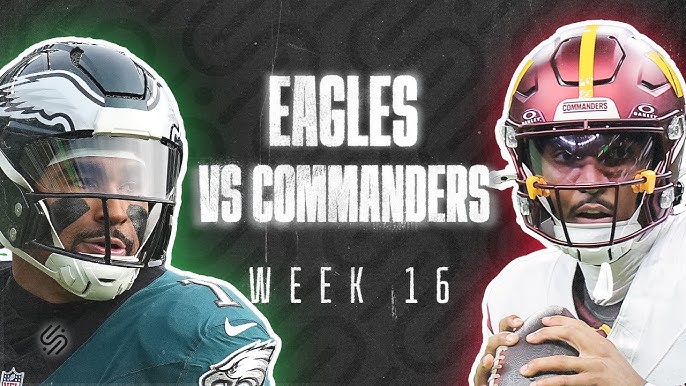
Last Updated: January 27, 2025 | NFC Championship Game
Washington Commanders vs Philadelphia Eagles Match Player Stats You can check Here!
The Philadelphia Eagles dominated the Washington Commanders 55-23 in the NFC Championship game at Lincoln Financial Field on January 26, 2025. This wasn’t just a victory—it was a statement game that showcased the Eagles‘ explosive offensive firepower and suffocating defensive pressure.
The final score tells only part of the story. Philadelphia controlled every phase of the game, from time of possession (30:31 vs 29:29) to turnover margin (4-0 advantage), proving why they earned their spot in Super Bowl LIX. The Commanders entered the game with momentum from their playoff run, but the Eagles had different plans at home.
Table of Contents
Quarter-by-Quarter Breakdown
| Quarter | WSH | PHI | Key Moment |
|---|---|---|---|
| 1st | 3 | 14 | Saquon Barkley 60-yard TD rush sets the tone |
| 2nd | 12 | 13 | Terry McLaurin 36-yard touchdown gives WSH hope |
| 3rd | 8 | 7 | Jalen Hurts 9-yard rushing touchdown |
| 4th | 0 | 21 | Eagles’ defense dominates, offense explodes |
| Final | 23 | 55 | PHI advances to Super Bowl |
The game highlights revealed a tale of two halves. Washington stayed competitive through three quarters, trailing 34-23 entering the fourth. Then the floodgates opened. Philadelphia scored 21 unanswered points in the final quarter, turning a competitive playoff game into a blowout.
Key Game Statistics
| Stat Category | Commanders (WSH) | Eagles (PHI) |
|---|---|---|
| Total Yards | 350 | 459 |
| First Downs | 22 | 28 |
| Third Down Efficiency | 7/17 (41%) | 5/10 (50%) |
| Fourth Down Efficiency | 4/6 (67%) | 1/1 (100%) |
| Red Zone Efficiency | 1/2 (50%) | 7/7 (100%) |
| Turnovers | 4 | 0 |
| Penalties | 9-47 | 5-30 |
| Time of Possession | 29:29 | 30:31 |
The team statistics reveal why Philadelphia advanced. Perfect red zone efficiency (7/7) meant every scoring opportunity became points. Meanwhile, Washington‘s four turnovers—including two interceptions and two fumbles—proved catastrophic in a playoff environment.
Quarterback Performance Comparison
The quarterback rating tells the complete story of this matchup. Jalen Hurts managed the game perfectly while Jayden Daniels fought valiantly but couldn’t overcome defensive pressure and crucial mistakes.
Passing Statistics Comparison
| QB Stat | Jayden Daniels (WSH) | Jalen Hurts (PHI) |
|---|---|---|
| Completions/Attempts | 29/48 | 20/28 |
| Completion Percentage | 60.4% | 71.4% |
| Passing Yards | 255 | 246 |
| Touchdowns | 1 | 1 |
| Interceptions | 1 | 0 |
| Sacks Taken | 3 | 2 |
| QB Rating | 72.8 | 98.2 |
| Yards per Attempt | 5.3 | 8.8 |
Jayden Daniels showed incredible resilience despite the player statistics working against him. The rookie quarterback completed 29 passes for 255 yards—impressive volume numbers. However, three sacks, one interception, and constant pressure prevented him from establishing rhythm. His 72.8 quarterback rating reflected the difficult circumstances.
Daniels’ Performance Breakdown
- First Half: Daniels managed the offense effectively early, completing 15 of 24 passes for 143 yards and one touchdown. His 36-yard strike to Terry McLaurin in the second quarter kept Washington competitive. The offensive stats showed promise.
- Second Half: Everything changed after halftime. Pressure mounted, forcing Daniels into rushed decisions. He completed just 14 of 24 attempts for 112 yards while throwing the crucial interception that swung momentum permanently to Philadelphia.
- Rushing Contribution: Daniels added 48 rushing yards on six carries, including a 10-yard rushing touchdown in the third quarter. His dual-threat ability created 303 total yards of offense—a testament to his game performance under pressure.
Hurts’ Masterclass
Jalen Hurts didn’t need gaudy numbers to dominate. His efficiency told the story: 71.4% completion percentage, zero turnovers, and a stellar 98.2 quarterback rating. He threw just 28 passes but made every throw count.
- Passing Efficiency: Hurts’ 246 yards came on fewer attempts, averaging 8.8 yards per pass—exceptional efficiency. His one passing touchdown (4-yard strike to A.J. Brown) showed precision in red zone situations.
- Rushing Dominance: The true damage came on the ground. Hurts rushed three times for 41 yards and three rushing touchdowns. Yes, three rushing scores in a championship game. His ability to read defenses and execute designed runs proved unstoppable.
Historical Context
Jayden Daniels still made history despite the loss. His 822 passing yards this postseason set a rookie record, surpassing previous marks. These playoff implications position him as a future star, while Hurts cemented his status as an elite playoff quarterback with his third straight dominant performance.
Rushing Attack Breakdown

The rushing yards differential decided this game. Philadelphia totaled 228 yards on 40 carries (5.7 yards per carry) while Washington managed just 93 yards on 28 attempts (3.3 average). That 135-yard gap created insurmountable field position advantages.
Top Rushers Statistics
| Player | Team | Carries | Yards | Average | Long | TDs |
|---|---|---|---|---|---|---|
| Saquon Barkley | PHI | 15 | 118 | 7.9 | 60 | 3 |
| Jalen Hurts | PHI | 3 | 41 | 13.7 | 22 | 3 |
| Brian Robinson Jr. | WSH | 16 | 63 | 3.9 | 11 | 1 |
| Jayden Daniels | WSH | 6 | 48 | 8.0 | 19 | 1 |
| Austin Ekeler | WSH | 5 | 15 | 3.0 | 8 | 0 |
Saquon Barkley’s Championship Performance
Saquon Barkley delivered a legendary playoff performance. His 118 rushing yards and three touchdowns on just 15 carries showcased elite efficiency. The game highlights were dominated by his explosive runs.
Opening Statement: Barkley’s 60-yard touchdown run on Philadelphia‘s second possession set the tone. The burst through the line, the vision to find the cutback lane, and the speed to reach the end zone—it was vintage Barkley.
Red Zone Killer: His other two scores came on 4-yard plunges, showing power to complement his speed. When Philadelphia reached the red zone, Barkley became inevitable. His 7.9 yards per carry average was extraordinary for a back with 15+ carries.
Fantasy Football MVP: Barkley owners celebrated three touchdowns and bonus yardage points. His 118 yards plus three scores generated approximately 29.8 fantasy points in standard scoring—a championship-winning performance.
Brian Robinson Jr.’s Steady Contribution
Brian Robinson Jr. provided Washington‘s only consistent ground game. His 63 yards on 16 carries kept drives alive early. The one-yard touchdown plunge in the first quarter gave the Commanders their only lead (3-0).
Robinson’s 3.9 yards per carry couldn’t match Philadelphia‘s efficiency, but he battled through contact consistently. The offensive stats show he faced stacked boxes all game, with Eagles defenders keying on the run while daring Daniels to beat them through the air.
Dual-Threat Quarterback Impact
Both quarterbacks contributed significantly to rushing yards. Hurts‘ 41 yards on just three carries (13.7 average!) included designed QB runs that Washington‘s defense couldn’t stop. His three rushing touchdowns made him unstoppable near the goal line.
Daniels added 48 yards and one score, showing the athleticism that made him special all season. His 19-yard scramble in the first quarter (the longest QB rush in postseason history for Washington) demonstrated his escapability under pressure.
Receiving Corps Statistics
The receiving yards battle showcased contrasting approaches. Washington spread the ball across eight receivers while Philadelphia rode their stars. Both strategies worked within their offensive systems, but the Eagles‘ explosive plays proved more impactful.
Top Receivers Performance
| Receiver | Team | Receptions | Yards | Average | Long | TDs |
|---|---|---|---|---|---|---|
| Zach Ertz | WSH | 11 | 104 | 9.5 | 21 | 0 |
| A.J. Brown | PHI | 6 | 96 | 16.0 | 45 | 1 |
| Terry McLaurin | WSH | 3 | 51 | 17.0 | 36 | 1 |
| DeVonta Smith | PHI | 4 | 68 | 17.0 | 28 | 0 |
| Dyami Brown | WSH | 5 | 62 | 12.4 | 28 | 0 |
| Olamide Zaccheaus | WSH | 4 | 48 | 12.0 | 18 | 0 |
Zach Ertz’s Record-Breaking Night
Zach Ertz delivered an incredible game performance with 11 receptions for 104 yards. His 11 catches set a Washington Commanders franchise record for receptions by a tight end in a playoff game—a remarkable achievement.
Possession Receiver: Ertz became Daniels’ security blanket, converting crucial third down situations throughout the game. Eight of his 11 catches came on third or fourth down, moving the chains when Washington desperately needed it.
Historical Milestone: With these catches, Ertz surpassed 500 career postseason receiving yards, joining an elite group of tight ends. He moved into 7th place all-time for playoff receptions by a tight end, passing Antonio Gates and Jason Witten.
Fantasy Value: Ertz’s 11 receptions generated solid PPR fantasy points despite no touchdowns. In PPR leagues, he delivered approximately 21.4 points—a reliable playoff performance.
A.J. Brown’s Explosive Impact
A.J. Brown didn’t need volume to dominate. His six catches for 96 yards and one touchdown showed his big-play ability. The 16.0 yards per reception average created explosive gains that flipped field position.
Red Zone Target: Brown’s 4-yard touchdown reception from Hurts in the second quarter came on a perfectly executed fade route. His body control and hands in tight coverage proved why he’s among the NFL’s elite receivers.
Deep Threat: His 45-yard reception stretched Washington‘s secondary and set up scoring opportunities. When Philadelphia needed chunk plays, Brown delivered.
Terry McLaurin’s Touchdown Strike
Terry McLaurin caught just three passes but made them count. His 51 yards and one touchdown came in crucial moments. The 36-yard scoring strike from Daniels in the second quarter temporarily gave Washington hope, cutting Philadelphia‘s lead to 14-12.
McLaurin’s ability to create separation and make contested catches kept him dangerous despite limited targets. His postseason now includes three straight games with receiving touchdowns—matching Travis Kelce’s recent record.
Philadelphia’s Balanced Attack
DeVonta Smith added four catches for 68 yards, providing a complementary threat to Brown. Together, they totaled 164 yards on 10 catches—efficient production that kept Washington‘s defense honest and unable to double-team either receiver consistently.
Defensive Performance Analysis
The defensive stats reveal Philadelphia‘s dominance. The Eagles recorded four turnovers, multiple sacks, and consistent pressure that disrupted Washington‘s rhythm throughout the game.
Defensive Leaders Statistics
| Defender | Team | Total Tackles | Solo | Assists | Sacks | TFL | QB Hits |
|---|---|---|---|---|---|---|---|
| Zack Baun | PHI | 12 | 8 | 4 | 0 | 2 | 1 |
| Bobby Wagner | WSH | 9 | 5 | 4 | 0 | 1 | 0 |
| Jeremy Chinn | WSH | 8 | 6 | 2 | 0 | 0 | 0 |
| Oren Burks | PHI | 7 | 5 | 2 | 1 | 1 | 1 |
| Frankie Luvu | WSH | 4 | 3 | 1 | 1 | 2 | 1 |
| Dorance Armstrong | WSH | 2 | 2 | 0 | 1 | 1 | 1 |
Philadelphia’s Dominant Defense
Zack Baun led all defenders with 12 total tackles (8 solo). His sideline-to-sideline range disrupted Washington‘s outside running attempts and intermediate passing routes. Two tackles for loss showed his ability to penetrate and make plays behind the line of scrimmage.
Turnover Creation: The Eagles‘ defense forced four turnovers—one interception and three forced fumbles (two recovered). This turnover margin proved decisive, giving Philadelphia‘s offense short fields and momentum-swinging plays.
Pass Rush Excellence: Philadelphia recorded three sacks and eight quarterback hits. The pressure forced Daniels into rushed throws and contributed to his interception. Oren Burks‘ sack on a crucial third down in the fourth quarter essentially ended Washington‘s comeback hopes.
Washington’s Defensive Effort
Bobby Wagner showed why he’s a future Hall of Famer with nine tackles and veteran leadership. His pursuit angles and gap discipline kept Philadelphia‘s rushing attack from being even more dominant early in the game.
Frankie Luvu provided the pass rush with one sack and two tackles for loss. His speed off the edge created pressure even when not recording sacks. Dorance Armstrong added another sack, showing Washington‘s front seven fought hard despite the scoreboard.
Coverage Challenges: The Commanders‘ secondary struggled containing Brown and Smith. Philadelphia‘s receivers consistently created separation, forcing Washington to commit extra defenders and leaving running lanes open for Barkley and Hurts.
Snap Count Analysis
Philadelphia utilized rotations effectively, keeping defenders fresh throughout the game. Their depth chart allowed for substitutions without significant dropoff. Washington played key defenders over 90% of snaps, leading to fatigue in the fourth quarter when Philadelphia pulled away.
Special Teams Contribution
Special teams played a subtle but important role in field position and scoring. While no game-changing plays occurred, the consistency of both units affected game performance.
Kicking Statistics
| Category | Zane Gonzalez (WSH) | Jake Elliott (PHI) |
|---|---|---|
| Field Goals Made | 3/3 | 0/0 |
| Extra Points Made | 2/3 | 7/7 |
| Longest Field Goal | 46 yards | N/A |
| Touchbacks | 2 | 8 |
Jake Elliott kicked seven extra points (all successful) but didn’t attempt a field goal—Philadelphia‘s offense scored touchdowns on every red zone trip except one short field situation where they scored on a short run.
Zane Gonzalez converted all three field goal attempts (34, 46, 42 yards) but missed one extra point. His kicks kept Washington competitive in the first half when touchdown drives stalled.
Punting Performance
Tress Way completed a 23-yard pass on a fake punt—the longest completion by a Washington punter in postseason history! This highlight provided a memorable moment despite the loss. Way averaged 43.2 yards per punt on three attempts.
Philadelphia‘s punter had minimal involvement—punting just once for 48 yards. The Eagles‘ offense rarely needed to punt, maintaining pressure throughout.
Return Game
Neither team generated explosive returns. Washington averaged 18.3 yards per kickoff return while Philadelphia averaged 22.1. No returns significantly changed field position or momentum, keeping the focus on offensive and defensive units.
Key Statistical Highlights
Several player statistics and team statistics deserve special recognition for their historical significance and impact on the game performance:
Offensive Records & Milestones
- Jayden Daniels – 822 postseason passing yards (rookie record)
- Zach Ertz – 11 receptions (franchise playoff record for tight end)
- Saquon Barkley – 3 rushing touchdowns (tied playoff career high)
- Jalen Hurts – 3 rushing TDs in championship game (rare feat)
- Terry McLaurin – 3 straight playoff games with receiving TD
- Philadelphia – 7/7 red zone efficiency (perfect rate)
- Daniels – 19-yard QB scramble (longest by WSH QB in playoffs)
Defensive Achievements
- Philadelphia – 4 turnovers forced (season high)
- Zack Baun – 12 tackles (team high)
- Eagles defense – Zero turnovers allowed (6th straight game)
- Washington – 3 sacks despite being dominated
- Bobby Wagner – 9 tackles (led WSH defense)
Team Statistical Dominance
Philadelphia controlled critical categories:
- Third down conversion: 50% vs 41%
- Red zone efficiency: 100% vs 50%
- Turnover margin: +4
- Total yards: 459 vs 350
- Points per drive: 5.0 vs 2.1
These box score numbers tell the story: Philadelphia executed efficiently while Washington couldn’t capitalize on opportunities.
Game-Changing Moments
Beyond the player stats, specific sequences altered the game’s trajectory:
First Quarter: Barkley’s Statement
Saquon Barkley‘s 60-yard touchdown run on Philadelphia‘s second possession (7:39 remaining) immediately answered Washington‘s opening field goal. The explosive play demonstrated the speed and power difference between the teams.
Second Quarter: Turnover Avalanche
Washington fumbled twice in the second quarter, both in Philadelphia territory. These turnovers prevented potential scoring drives and gave the Eagles short fields. The momentum shift was palpable—Washington went from competitive to desperate.
Third Quarter: The Interception
Daniels’ interception early in the third quarter came at a crucial moment. Washington trailed 34-23 but was driving with momentum. The turnover led to a Philadelphia touchdown drive that essentially ended competitive play.
Fourth Quarter: Defensive Dominance
Philadelphia‘s defense recorded two fourth-quarter sacks, one forced fumble, and held Washington scoreless. The shutout quarter showcased elite playoff defense at its finest. Washington‘s offense generated just 47 total yards in the final period.
Fantasy Football Impact
The fantasy points generated in this game created champions and ended seasons in leagues with playoff formats extending to the NFC Championship.
Top Fantasy Performers
| Player | Standard Points | PPR Points | Impact |
|---|---|---|---|
| Saquon Barkley | 29.8 | 31.3 | League Winner |
| Jalen Hurts | 34.6 | 34.6 | Elite QB1 |
| Zach Ertz | 10.4 | 21.4 | PPR Gold |
| A.J. Brown | 15.6 | 21.6 | WR1 Production |
| Jayden Daniels | 21.4 | 21.4 | QB1 Despite Loss |
Running Back Analysis
Saquon Barkley delivered championship-level production. His three touchdowns plus 118 rushing yards made him the top fantasy running back of championship week. Managers who started him likely won their leagues.
Brian Robinson Jr. provided RB2 flex value with one touchdown but lacked the explosive plays to be a difference-maker. His 6.3 fantasy points (standard) served as a floor but not a ceiling play.
Quarterback Strategies
Jalen Hurts combined 246 passing yards, one passing touchdown, 41 rushing yards, and three rushing scores for 34.6 fantasy points. His dual-threat ability creates consistent QB1 production regardless of opponent.
Jayden Daniels still generated 21.4 points despite the loss, showing his fantasy floor remains high due to rushing yards and passing volume. Managers starting him survived but didn’t dominate.
Wide Receiver & Tight End Value
A.J. Brown delivered WR1 production with 21.6 PPR points. His big-play ability and touchdown created boom potential. Zach Ertz became a PPR star with 21.4 points on volume alone—11 receptions without scoring shows the value of target share.
Betting Implications
The 55-23 final easily covered the Philadelphia -6.5 spread. The over/under of 51.5 hit the over by 26.5 points—one of the highest-scoring playoff games in recent history. Bettors backing Philadelphia and the over cashed tickets comfortably.
Historical Context and NFC East Rivalry Stats
This victory continued Philadelphia‘s recent dominance over Washington while adding another chapter to the storied NFC East rivalry. The division standings shifted dramatically throughout the 2024-25 season, but Philadelphia ultimately proved superior.
Season Series Recap
Philadelphia swept the season series 3-0:
- Week 11: Eagles 26, Commanders 18
- Week 16: Eagles 33, Commanders 36 (WSH win)
- NFC Championship: Eagles 55, Commanders 23
The rivalry intensified with playoff stakes, creating must-watch television and passionate fan engagement from both Philadelphia, Pennsylvania and Washington D.C. markets.
All-Time Playoff Meetings
This marked the first playoff meeting between these teams since the NFC East realignment. The postseason clash added intensity to a rivalry that dates back decades through various team identities.
Rookie Quarterback Performance
Jayden Daniels joined an elite group of rookie quarterbacks reaching conference championships. Despite the loss, his playoff performance (2 wins, 822 passing yards, 3 total touchdowns) positions him among the best first-year playoff performances in NFL history.
Jalen Hurts continued his postseason excellence, improving to 5-1 in playoff games as a starter. His ability to elevate performance in January establishes him among the league’s elite playoff quarterbacks alongside Patrick Mahomes and Josh Allen.
Super Bowl Implications
Philadelphia‘s victory sends them to Super Bowl LIX, continuing the NFC East‘s tradition of producing champions. The Eagles aim for their second Super Bowl title in three years, cementing a potential dynasty.
Washington‘s season ended with a 12-6 record (including playoffs), exceeding all preseason expectations. The playoff implications for 2025 look promising with a young core led by Daniels, McLaurin, and an improving defense.
FAQs: Washington Commanders vs Philadelphia Eagles Stats
Who won the Commanders vs Eagles game?
The Philadelphia Eagles defeated the Washington Commanders 55-23 in the NFC Championship game on January 26, 2025, at Lincoln Financial Field.
What were the final stats between Washington and Philadelphia?
Philadelphia dominated with 459 total yards, 7/7 red zone efficiency, and 4 turnovers forced. Washington generated 350 yards but committed 4 turnovers in the loss.
How did Jayden Daniels perform against the Eagles?
Jayden Daniels completed 29 of 48 passes for 255 yards, 1 touchdown, and 1 interception. He added 48 rushing yards and 1 rushing touchdown for 303 total yards.
What were Saquon Barkley’s stats in the game?
Saquon Barkley rushed for 118 yards and 3 touchdowns on 15 carries (7.9 average). His performance earned him NFC Championship MVP consideration.
How many touchdowns did Jalen Hurts score?
Jalen Hurts scored 4 total touchdowns—1 passing touchdown and 3 rushing touchdowns. He completed 20 of 28 passes for 246 yards with no interceptions.
What records did Zach Ertz break?
Zach Ertz caught 11 passes for 104 yards, setting a Washington franchise record for receptions by a tight end in a playoff game and surpassing 500 career postseason receiving yards.
Did Terry McLaurin score a touchdown?
Yes, Terry McLaurin caught a 36-yard touchdown pass from Jayden Daniels in the second quarter, his third consecutive playoff game with a receiving touchdown.
What was the turnover margin in the game?
Philadelphia won the turnover margin 4-0, forcing 1 interception and recovering 3 fumbles while committing zero turnovers—a critical factor in the blowout victory.
How did Bobby Wagner perform defensively?
Bobby Wagner led Washington‘s defense with 9 total tackles (5 solo, 4 assists) and 1 tackle for loss, showcasing veteran leadership despite the defensive struggles.
What are the fantasy football implications from this game?
Saquon Barkley (29.8 standard points) and Jalen Hurts (34.6 points) delivered league-winning performances. Zach Ertz provided elite PPR value with 21.4 points on 11 receptions.
Conclusion: Statistical Dominance Leads Eagles to Super Bowl
The Washington Commanders vs Philadelphia Eagles match player stats reveal a comprehensive beatdown in every category that matters. Philadelphia‘s perfect red zone efficiency, dominant turnover margin, and balanced offensive attack created a 55-23 victory that wasn’t as close as the first three quarters suggested.
Jalen Hurts and Saquon Barkley formed an unstoppable dual-threat combination, generating 7 combined touchdowns that demoralized Washington‘s defense. The Eagles‘ defense forced four turnovers while allowing none—a championship formula.
Jayden Daniels showed incredible promise despite the loss. His 822 postseason passing yards as a rookie, combined with clutch performances throughout the playoff run, establish him as a future elite quarterback. Zach Ertz and Terry McLaurin provided veteran leadership and production.
The game performance statistics demonstrate why Philadelphia earned Super Bowl LIX positioning: efficiency, explosiveness, and execution. Washington‘s season ends with pride—a 12-6 record and playoff victory exceeded expectations for a young team building toward sustained success.
As we analyze the box score and player statistics, one truth emerges: Philadelphia Eagles dominated every phase, proving they belong among the NFL’s elite teams. The NFC East rivalry continues, but on January 26, 2025, at Lincoln Financial Field, there was only one champion.
Final Thought: These player stats will be remembered as the night Saquon Barkley and Jalen Hurts combined for one of the most dominant playoff performances in recent memory, while Jayden Daniels announced himself as the future of the Washington Commanders despite the heartbreaking loss.
For more NFL analysis, playoff coverage, and fantasy football insights, bookmark this page and check back for updates after every major game throughout the season.

I’m Watson, a faith-inspired writer passionate about sharing heartfelt blessings and uplifting words that bring peace, gratitude, and hope. Through my daily blessings, I aim to comfort the soul and inspire spiritual growth.