
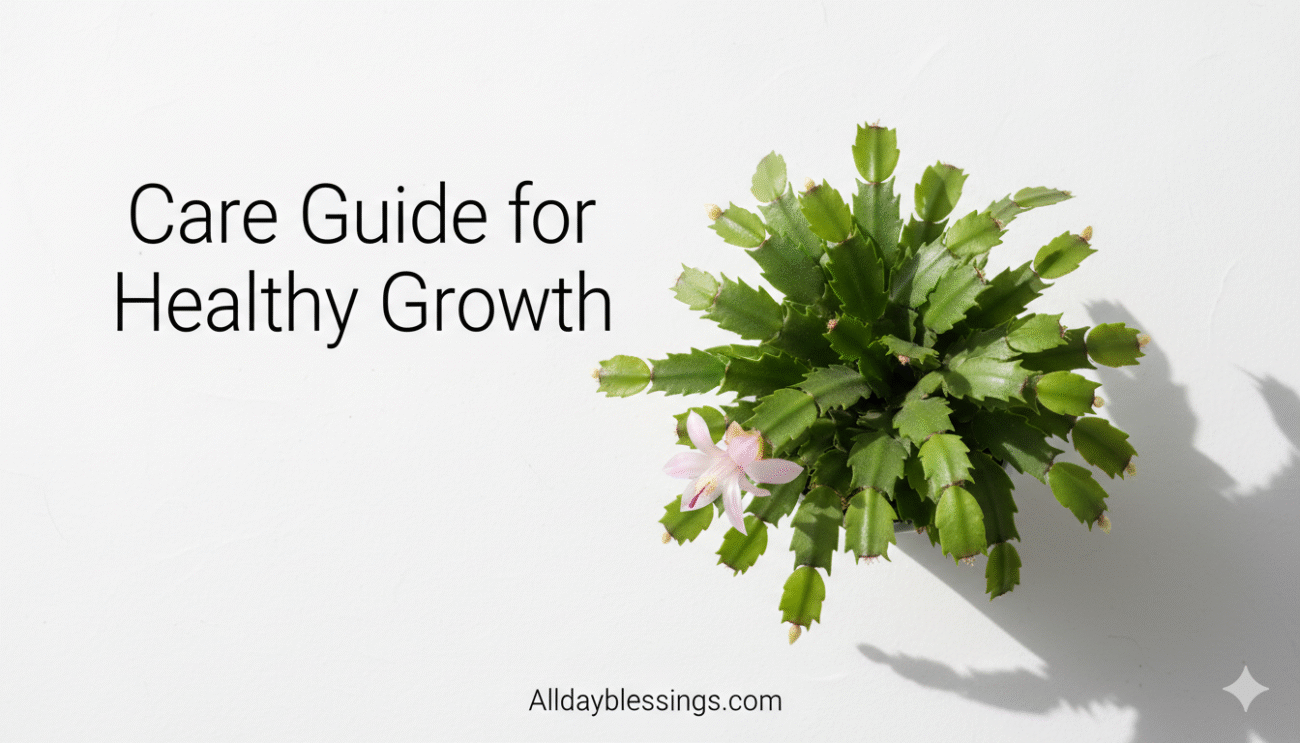
A Christmas Cactus Care Guide helps you understand exactly how to take care of this popular holiday plant so it grows healthy and blooms beautifully each year. If you’re not sure when to water it, how much light it needs, or what helps it flower on time, this guide gives you all the answers in one place. From basic care tips to seasonal growth advice, this Christmas Cactus Care Guide will make it easy for anyone—beginner or expert—to keep their plant thriving in 2025–2026.
As we head into 2025-2026, many plant enthusiasts are discovering that Christmas cacti can live for decades—even up to 100 years—becoming treasured family heirlooms passed down through generations. With proper care and attention to their specific needs, your winter cactus can produce vibrant blooms year after year, adding festive cheer to every holiday season.
What makes 2025-2026 special for Christmas cactus care? Climate patterns are shifting, indoor environments are changing with smart home technology, and new research has given us better insights into triggering those spectacular blooms. This guide incorporates the latest growing techniques while honoring traditional methods that have worked for generations.
Table of Contents
Quick Reference: Christmas Cactus at a Glance
| Characteristic | Details |
|---|---|
| Scientific Name | Schlumbergera bridgesii, S. x buckleyi |
| Common Names | Christmas cactus, holiday cactus, winter cactus, crab cactus |
| Native Habitat | Brazilian rainforest (South America) |
| Plant Type | Epiphytic succulent, tropical cactus |
| Bloom Time | December through February (winter months) |
| Flower Colors | Pink, red, white, purple, orange, magenta |
| Mature Size | 12-24 inches tall, 24 inches wide |
| Growth Rate | Slow to moderate |
| Hardiness Zones | USDA Zones 10-12 (indoor plant elsewhere) |
| Light Requirements | Bright indirect light, filtered sunlight |
| Soil Type | Well-draining, peat-based mix |
| Lifespan | Up to 100 years with proper care |
| Pet Safety | Non-toxic to cats and dogs |
Understanding Your Christmas Cactus
Before diving into care instructions, it’s essential to understand what makes your Christmas cactus unique. This knowledge will help you provide the right conditions for healthy growth and abundant flowering.
The Epiphytic Nature
Christmas cacti are epiphytic plants, meaning in their native environment, they grow on tree branches rather than in soil. They absorb moisture and nutrients from the air, rain, and organic matter that collects around their roots. This epiphytic lifestyle explains why:
- They need well-draining soil (not dense, moisture-retentive mixes)
- They prefer higher humidity than desert cacti
- They thrive in bright indirect light rather than intense direct sunlight
- Their roots need air circulation and hate being waterlogged
Identifying True Christmas Cactus vs. Holiday Cactus Varieties
Many plants sold as “Christmas cactus” are actually Thanksgiving cacti or holiday cactus hybrids. Here’s how to identify what you really have:
Christmas Cactus (Schlumbergera bridgesii)
- Smooth, scalloped leaf segments with rounded edges
- Blooms naturally in December through January
- Flowers hang more symmetrically
- True Christmas cacti are increasingly rare in nurseries
Thanksgiving Cactus (Schlumbergera truncata)
- Pointed, claw-like projections on leaf segments
- Blooms in late November through December
- Most common “Christmas cactus” sold in stores
- Growers manipulate bloom timing for holiday sales
Easter Cactus (Rhipsalidopsis gaertneri)
- More rounded, bristled stem segments
- Blooms March through May (spring cactus)
- Star-shaped flowers with more pointed petals
- Different care requirements for blooming
Good news: All three types share similar basic care requirements, so this guide applies to whichever holiday cactus you own. The main difference lies in bloom timing and the light/temperature manipulation needed to trigger flowering.
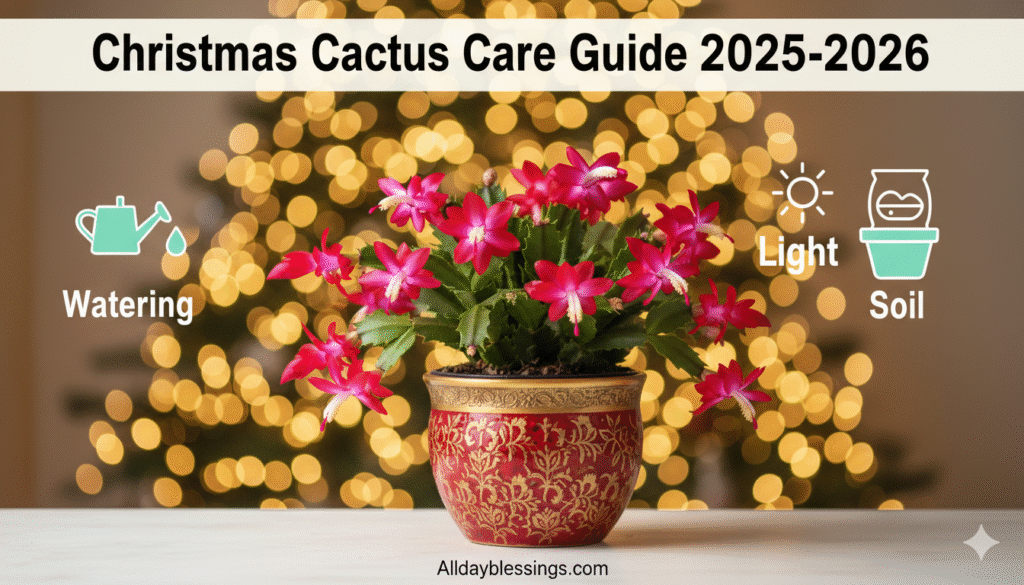
Anatomy of Your Christmas Cactus
Understanding plant structure helps you provide better care:
Stem Segments (Cladodes)
- Flat, segmented leaves that perform photosynthesis
- Each segment is 2-3 inches long
- Stores water like typical succulent tissue
- New growth emerges from segment tips
Root System
- Relatively small, shallow root system
- Prefers being slightly root-bound
- Sensitive to overwatering and root rot
- Needs excellent drainage
Flowers (Tubular Blooms)
- Zygomorphic flowers with asymmetrical petals
- Tubular shape, 2-3 inches long
- Multiple blooms from each stem tip
- Last 4-6 weeks under optimal conditions
- Can produce 50+ flowers on mature plants
Growth Habit
- Cascading or trailing growth pattern
- Perfect for hanging baskets
- Branches naturally as it matures
- Can spread 2 feet or more over time
Month-by-Month Care Schedule (2025-2026)
This comprehensive calendar takes you through an entire year of Christmas cactus care, optimized for the 2025-2026 growing season. Follow these monthly guidelines for maximum blooms and healthy growth.
Winter (December 2024 – February 2025): Blooming Season
December 2024
- Primary Focus: Enjoy blooms, maintain display conditions
- Watering: Keep soil slightly moist; water when top inch feels dry
- Light: Bright indirect light, 8-10 hours daily
- Temperature: 60-70°F during blooming
- Fertilizer: None during active blooming
- Special Care: Deadhead faded blooms to extend flowering period
- What to Expect: Peak bloom period; flowers last 4-6 weeks
January 2025
- Primary Focus: End of bloom cycle, transition to rest
- Watering: Reduce gradually as blooms fade
- Light: Continue bright indirect light
- Temperature: Maintain 60-70°F
- Fertilizer: None yet
- Special Care: Remove all spent flowers; begin planning repotting if needed
- What to Expect: Late blooms finishing; plant entering rest period
February 2025
- Primary Focus: Resting period begins
- Watering: Water only when top 2 inches dry (every 10-14 days)
- Light: Bright indirect light, can tolerate slightly lower light
- Temperature: 60-65°F
- Fertilizer: None during rest
- Special Care: This is ideal repotting time if needed
- What to Expect: Minimal new growth; plant conserving energy
Spring (March – May 2025): Active Growth Season
March 2025
- Primary Focus: Growth season begins
- Watering: Increase frequency as new growth appears (every 7-10 days)
- Light: Bright indirect light, 10-12 hours
- Temperature: 65-75°F
- Fertilizer: Begin balanced houseplant fertilizer (5-10-5), half strength monthly
- Special Care: Repot if not done in February; prune leggy stems
- What to Expect: New stem segments emerging from tips
April 2025
- Primary Focus: Peak active growth
- Watering: Regular watering when top inch dries (every 7 days)
- Light: Can move outdoors to shaded location if temperatures permit
- Temperature: 65-75°F
- Fertilizer: Continue monthly feeding
- Special Care: Perfect time for propagation from pruned stems
- What to Expect: Rapid new growth; plant filling out
May 2025
- Primary Focus: Continued growth, outdoor transition
- Watering: Consistent moisture, check every 5-7 days
- Light: Filtered outdoor light or bright indoor location
- Temperature: 65-80°F tolerated
- Fertilizer: Monthly feeding continues
- Special Care: Ensure outdoor plants have wind protection
- What to Expect: Robust growth; plant may double in size
Summer (June – August 2025): Maintenance Period
June 2025
- Primary Focus: Summer care routine
- Watering: More frequent (every 5-7 days) due to warmer temperatures
- Light: Protected from direct afternoon sun
- Temperature: 70-80°F; move inside if exceeds 90°F
- Fertilizer: Last feeding of the season
- Special Care: Watch for pests; increase humidity if air is dry
- What to Expect: Steady growth; stems maturing
July 2025
- Primary Focus: Maintain health during heat
- Watering: Check frequently; may need every 4-5 days
- Light: Ensure shade during hottest parts of day
- Temperature: Keep below 85°F if possible
- Fertilizer: None
- Special Care: Mist leaves occasionally for humidity
- What to Expect: Growth slows in extreme heat
August 2025
- Primary Focus: Prepare for bloom cycle
- Watering: Begin reducing slightly toward month end
- Light: Continue bright indirect light
- Temperature: 70-80°F
- Fertilizer: None
- Special Care: Stop fertilizing completely by mid-month
- What to Expect: Growth slowing naturally
Fall (September – November 2025): Bloom Preparation
September 2025 ⭐ CRITICAL MONTH
- Primary Focus: Initiate blooming process
- Watering: Reduce to every 10-14 days (soil should dry more between waterings)
- Light: Begin 12-14 hours darkness nightly; bright light during day
- Temperature: Cool to 50-60°F at night, 65-70°F during day
- Fertilizer: None
- Special Care: Move to cool room; eliminate all artificial light at night
- What to Expect: Bud formation begins (small bumps at stem tips)
October 2025 ⭐ CRITICAL MONTH
- Primary Focus: Continue bloom induction
- Watering: Keep on reduced schedule (every 10-14 days)
- Light: Maintain 12-14 hours uninterrupted darkness
- Temperature: 50-65°F (cooler temperatures crucial)
- Fertilizer: None
- Special Care: Do NOT disturb plant location; avoid drafts
- What to Expect: Buds enlarging; maintain strict light/temp regimen
November 2025
- Primary Focus: Bud development and coloring
- Watering: Increase slightly as buds develop (every 7-10 days)
- Light: Can reduce darkness to 10-12 hours; buds are set
- Temperature: Gradually increase to 60-70°F
- Fertilizer: None
- Special Care: Move to display location; maintain consistent conditions
- What to Expect: Buds showing color; some early blooms possible
Winter (December 2025 – February 2026): Second Bloom Cycle
December 2025
- Primary Focus: Full bloom display
- Watering: Keep consistently moist during flowering
- Light: 8-10 hours bright indirect light
- Temperature: 60-70°F
- Fertilizer: None
- Special Care: Deadhead spent blooms promptly
- What to Expect: Peak bloom period; enjoy your success!
January – February 2026
- Repeat the cycle as outlined for 2025
The Science Behind Christmas Cactus Blooming
Understanding the biology of blooming helps you manipulate conditions for spectacular flower displays. Christmas cacti are photoperiodic plants, meaning they respond to changes in day length.
Photoperiodism: The Light Connection
Christmas cacti are short-day plants (also called long-night plants). Here’s the science:
In Nature (Brazilian Rainforest)
- Days naturally shorten in fall/winter
- Plant receives 12-14 hours of darkness nightly
- Cooler temperatures coincide with shorter days
- These signals trigger reproductive cycle (flowering)
Critical Photoperiod
- Needs 12-14 hours of continuous darkness for 6-8 weeks
- Even brief light exposure (bathroom light, streetlight) disrupts the signal
- Phytochrome proteins in plant cells detect light/dark cycles
- Darkness must be uninterrupted for hormone shifts to occur
Why It Matters for 2025-2026
- Indoor lighting (LED, smart home systems) can accidentally prevent blooming
- Street lights outside windows affect photoperiod
- Consistent darkness is more important than total darkness hours
Temperature’s Role in Bud Formation
Temperature works alongside photoperiod:
Optimal Temperature Sequence
- Bud Initiation (September-October): 50-60°F at night triggers hormone production
- Bud Development (November): 55-65°F allows bud growth
- Blooming (December-January): 60-70°F for flower opening and longevity
The Thermoperiodism Effect
- Temperature differential between day and night is crucial
- 10-15°F drop at night signals seasonal change
- Too warm = poor bud formation
- Too cold (below 50°F) = bud drop
Hormonal Changes During Bloom Cycle
Growth Phase (Spring-Summer)
- High auxin levels promote vegetative growth
- Gibberellins encourage stem elongation
- Plant focuses energy on building structure
Transition Phase (Late Summer)
- Auxin production decreases
- Plant becomes receptive to flowering signals
Flowering Phase (Fall)
- Florigen (flowering hormone) increases with proper light/temp
- Cytokinins direct energy to bud formation
- Ethylene regulates flower development and opening
Why Christmas Cacti Sometimes Refuse to Bloom
Common Physiological Barriers:
- Insufficient Dark Period
- Interrupted darkness prevents florigen production
- Even 5 minutes of light resets the dark period clock
- Wrong Temperature Range
- Too warm: plant thinks it’s still growing season
- Too cold: stress response, bud abortion
- Nutritional Imbalance
- Excess nitrogen promotes leaves over flowers
- Phosphorus and potassium needed for blooms
- Plant Maturity
- Young plants (under 2 years) may not bloom
- Mature plants have established hormonal patterns
- Root Stress
- Recently repotted plants skip a bloom cycle
- Root disturbance disrupts hormone production
Essential Care Requirements
Master these five fundamental elements, and your Christmas cactus will thrive for decades.
1. Light Requirements: Finding the Sweet Spot
Christmas cacti need bright light but hate direct sun. Here’s how to get it right:
Ideal Light Conditions
- Intensity: Bright indirect light, 1000-2500 foot-candles
- Duration: 10-12 hours during growing season (spring-summer)
- Quality: Filtered or dappled sunlight, similar to understory forest
Best Window Locations
- North-facing windows: Perfect year-round; gentle, consistent light
- East-facing windows: Ideal; bright morning sun, indirect afternoon light
- West-facing windows: Good with sheer curtain to filter intense afternoon sun
- South-facing windows: Place 3-4 feet back from window or use sheer curtains
Light Problems and Solutions
| Problem | Symptoms | Solution |
|---|---|---|
| Too much direct sun | Red/pink leaf segments, brown scorched spots | Move away from window or add sheer curtain |
| Insufficient light | Leggy growth, pale green color, no blooming | Move closer to window or add grow light |
| Uneven light | Lopsided growth | Rotate plant 1/4 turn weekly |
| Summer sun damage | Bleached, yellow segments | Move to shadier location or bring indoors |
Artificial Lighting for 2025-2026
With modern LED technology, you can grow Christmas cacti successfully with artificial light:
- LED grow lights: Full spectrum, 6500K color temperature
- Distance: 12-18 inches from plant
- Duration: 10-12 hours daily during growth; reduce for bloom trigger
- Smart home integration: Program lights for automatic photoperiod control
Outdoor Placement (Zones 10-12 or Summer)
- Shaded patio or porch with dappled sunlight
- Protected from strong winds
- Under tree canopy or shade structure
- Morning sun, afternoon shade is ideal
2. Watering: The Goldilocks Balance
More Christmas cacti die from watering mistakes than any other cause. Here’s how to get it just right.
The Touch Test (Most Reliable Method)
- Insert finger 1-2 inches into soil
- If dry to the touch = time to water
- If any moisture = wait 2-3 more days
- Don’t rely on schedules alone
Seasonal Watering Guidelines
| Season | Frequency | Soil Moisture Goal | Notes |
|---|---|---|---|
| Winter (Blooming) | Every 5-7 days | Consistently moist, never dry | Critical for flower longevity |
| Spring (Growing) | Every 7-10 days | Moist with slight drying between | Support new growth |
| Summer (Maintenance) | Every 5-7 days | Slightly moist, dries faster in heat | Increase for high temperatures |
| Fall (Bloom Prep) | Every 10-14 days | Allow to dry more between waterings | Stress helps trigger blooming |
Proper Watering Technique
- Use room temperature water (cold shock can cause bud drop)
- Water thoroughly until it drains from bottom holes
- Empty drainage tray after 30 minutes
- Never leave plant sitting in water
- Water the soil, not the leaves (prevents fungal issues)
Water Quality Matters
- Tap water: Let sit 24 hours to off-gas chlorine
- Filtered water: Removes chlorine, fluoride, salts
- Rainwater: Ideal; naturally soft and chemical-free
- Distilled water: Okay short-term, lacks minerals long-term
Signs of Watering Problems
Overwatering Symptoms:
- Mushy, translucent stem segments
- Yellowing leaves
- Segments dropping off easily
- Foul smell from soil
- Root rot (black, slimy roots)
Underwatering Symptoms:
- Shriveled, wrinkled segments
- Red or purple leaf tinge
- Bud drop before opening
- Limp, wilted appearance
- Crispy leaf edges
3. Temperature: Creating Seasonal Rhythms
Christmas cacti are sensitive to temperature and use it as a seasonal cue.
Ideal Temperature Ranges by Season
Growing Season (March-August)
- Daytime: 65-75°F
- Nighttime: 60-70°F
- Can tolerate up to 85°F briefly
Bloom Preparation (September-October)
- Daytime: 65-70°F
- Nighttime: 50-60°F ⭐ CRITICAL
- Temperature drop triggers bud formation
Blooming Season (November-February)
- Daytime: 65-70°F
- Nighttime: 60-65°F
- Cooler = longer-lasting blooms
Temperature Stress Indicators
- Too hot (above 85°F): Bud drop, wilting, stress
- Too cold (below 50°F): Purple/red leaves, growth stops, bud abortion
- Extreme fluctuations: Segment drop, failure to bloom
Managing Temperature in 2025-2026
For Heating Season
- Keep away from heating vents and radiators
- Avoid placement near fireplaces
- Use programmable thermostat for nighttime cooling
- Consider unheated room for bloom preparation
For Cooling Season
- Avoid AC vents blowing directly on plant
- Don’t place near frequently opened doors (temperature swings)
- Move outdoors to shaded area if temperatures are 65-80°F
4. Humidity: Mimicking the Rainforest
As tropical plants, Christmas cacti appreciate higher humidity than typical indoor environments.
Optimal Humidity Levels
- Ideal: 50-60% relative humidity
- Acceptable: 40-50%
- Too low: Below 30% causes stress
Increasing Humidity Naturally
- Pebble Tray Method
- Fill shallow tray with pebbles
- Add water just below pebble surface
- Place pot on pebbles (not touching water)
- Water evaporates, creating humid microclimate
- Grouping Plants
- Cluster houseplants together
- Plants release moisture through transpiration
- Creates naturally higher humidity zone
- Room Placement
- Bathrooms and kitchens naturally more humid
- Away from heating/cooling vents
- Misting
- Light misting 2-3 times per week during dry months
- Mist early in day so leaves dry before evening
- Don’t mist during blooming (can spot flowers)
- Humidifier
- Most effective for consistent humidity
- Place within 3-6 feet of plant
- Maintain 45-55% year-round
Low Humidity Warning Signs
- Brown, crispy leaf edges
- Premature bud drop
- Spider mite infestations (they thrive in dry conditions)
- Slow growth despite adequate water
Watering Your Christmas Cactus Correctly
Let’s dive deeper into the most critical aspect of Christmas cactus care: watering.
Understanding Water Needs by Growth Phase
Active Growth (Spring-Summer)
- Plant is producing new segments
- Root system actively absorbing nutrients
- Higher transpiration rates in warmer temperatures
- Goal: Keep soil consistently moist but never soggy
Dormancy/Rest (Late Summer-Fall)
- Growth slows significantly
- Reduced water uptake
- Preparing for bloom cycle
- Goal: Allow soil to dry between waterings; mild stress beneficial
Blooming Period (Winter)
- High water demand to support flowers
- Blooms will wilt if underwatered
- Roots actively absorbing
- Goal: Consistent moisture without waterlogging
The Perfect Watering System
Bottom Watering Method (Recommended for Christmas Cactus)
- Fill drainage tray or sink with 1-2 inches room temperature water
- Place pot in water for 15-20 minutes
- Soil absorbs water from bottom up
- Remove and allow to drain completely
- Empty any remaining water from tray
Benefits:
- Encourages deep root growth
- Prevents leaf/stem wetting (reduces disease risk)
- Ensures thorough hydration
- Easy to avoid overwatering
Top Watering Method (Also Acceptable)
- Water slowly around soil surface edge
- Avoid getting water on stem segments
- Water until it flows from drainage holes
- Let drain for 30 minutes
- Empty drainage tray
Water Quality Deep Dive
Chlorine and Chloramine
- Municipal tap water contains these chemicals
- Can damage beneficial soil microbes
- May cause brown leaf tips over time
- Solution: Let water sit uncovered 24-48 hours before use
Hard Water Issues
- High mineral content (calcium, magnesium)
- Causes white crusty buildup on soil surface
- Can alter soil pH over time
- Solution: Use filtered water or collect rainwater
pH Considerations
- Christmas cacti prefer slightly acidic soil (5.5-6.5 pH)
- Alkaline water gradually raises soil pH
- Can interfere with nutrient uptake
- Solution: Occasional vinegar rinse (1 tbsp per gallon) or repot yearly
Seasonal Watering Schedule 2025-2026
December-February (Blooming)
- Check every 5-7 days
- Water when top 1 inch is dry
- Maintain consistent schedule
- More critical = bloom duration suffers if inconsistent
March-May (Active Growth)
- Check every 7-10 days
- Increase as temperatures rise
- Support rapid new segment growth
- Fertilize with watering during this phase
June-August (Summer Maintenance)
- Check every 5-7 days (more often if hot)
- May need twice-weekly in peak summer
- Outdoor plants need more frequent checks
- Watch for heat stress
September-November (Bloom Preparation)
- Reduce to every 10-14 days
- Let soil dry more between waterings
- This mild stress helps trigger blooming
- Don’t let plant severely wilt
Perfect Lighting Conditions
Light is the second most crucial factor after watering. Getting it wrong prevents blooming and causes growth problems.
Natural Light Strategies
Seasonal Light Adjustment
Spring/Summer (Growth Season)
- Bright indirect light, 10-12 hours daily
- Can handle slightly more light intensity
- Perfect time for outdoor placement in shade
- Rotate plant weekly for even growth
Fall (Bloom Preparation)
- Maintain bright daylight but reduce duration
- Critical: 12-14 hours complete darkness nightly
- No interruptions from artificial light
- Even streetlights can disrupt bloom cycle
Winter (Blooming)
- 8-10 hours bright indirect light
- Keep in consistent location (don’t move during blooming)
- Avoid drafty windows
- Display near natural light source
Room-by-Room Lighting Guide
Living Room
- East or north-facing window: Excellent
- 3-4 feet from south/west window: Good
- Avoid: Directly beside heat-generating electronics
Bedroom
- Perfect for fall bloom preparation (naturally dark at night)
- North-facing window ideal
- Avoid: LED alarm clocks or nightlights near plant during bloom prep
Kitchen
- Often has good natural light
- Avoid: Above stove (heat) or sink (water splashes)
- Benefit: Naturally higher humidity
Bathroom (With Windows)
- Excellent humidity levels
- Good for recovery after stress
- Ensure adequate light from windows
Office/Spare Room
- Ideal for bloom preparation (room not used at night)
- Control over lighting environment
- Can be kept cooler
Artificial Lighting Solutions for 2025-2026
LED Grow Lights (Best Option)
Specifications to Look For:
- Full spectrum (5000-6500K color temperature)
- 20-40 watts for single plant
- Adjustable height or dimming capability
- Timer function for photoperiod control
Placement Guidelines:
- 12-18 inches above plant during growth
- 10-12 hours daily spring-summer
- Reduce to 8-10 hours in fall to trigger blooming
- Combine with 12-14 hours darkness for bloom prep
Smart Home Integration
- Program smart plugs for automatic on/off
- Set schedules for seasonal light changes
- Eliminate manual light management
- Ensure timers maintain darkness periods
Fluorescent Lights (Budget Option)
- T5 or T8 fluorescent tubes work well
- Place 6-12 inches above plant
- Less energy efficient than LED
- Still effective for supplemental lighting
Light Problem Diagnosis
| Issue | Cause | Light Solution |
|---|---|---|
| No blooms despite good care | Interrupted darkness or insufficient dark period | Ensure 12-14 hours COMPLETE darkness for 6-8 weeks |
| Leggy, stretched growth | Too little light | Move closer to window or add grow light |
| Red/pink leaves (when not stressed) | Too much direct sun | Filter light with sheer curtain or move back |
| Pale, washed-out color | Excessive light exposure | Reduce light intensity or duration |
| Brown, scorched spots | Direct sun burning leaves | Immediately move to indirect light location |
| One-sided growth | Light source too directional | Rotate plant 90° weekly |
Temperature and Humidity Management
Creating the right atmospheric conditions separates mediocre Christmas cacti from spectacular specimens.
Temperature Management Through the Seasons
Spring Temperature Strategy (March-May 2025)
- Gradually increase warmth as days lengthen
- Open windows for fresh air circulation
- Transition outdoor plants when nights stay above 55°F
- Monitor for late frost warnings
Summer Temperature Strategy (June-August 2025)
- Move indoors if temperatures exceed 90°F for extended periods
- Provide afternoon shade for outdoor plants
- Increase watering frequency as temperature rises
- Watch for heat stress indicators (wilting, reddish leaves)
Fall Temperature Strategy (September-November 2025) ⭐
- September: Begin cool treatment
- Move to coolest room in house (50-60°F nights)
- Unheated garage, basement, or spare room
- This is THE most critical temperature period
- October: Maintain cool temperatures
- Continue 50-60°F nights, 65-70°F days
- 10-15°F day/night differential crucial
- Don’t bring plant into warm rooms
- November: Transition to display temperature
- Gradually increase to 60-70°F as buds develop
- Once buds show color, temperature less critical
- Can move to warmer display location
Winter Temperature Strategy (December 2025-February 2026)
- Maintain moderate temperatures (60-70°F)
- Avoid heat vents, radiators, fireplaces
- Cooler temperatures (60-65°F) extend bloom duration
- Protect from cold drafts and window touch
Advanced Temperature Techniques
Creating Microclimates Indoors
- Cool Room Method
- Designate spare bedroom or basement for bloom prep
- Use programmable thermostat
- Keep door closed to maintain cool temps
- Unheated Garage Technique
- Place plant in garage with windows (for light)
- Monitor temperature with thermometer
- Bring indoors if temps drop below 45°F
- Insulated Sunroom
- Perfect transition zone
- Naturally cools at night in fall
- Warm enough during day
Temperature Monitoring Tools
- Min/max thermometer: Tracks temperature range over 24 hours
- Smart temperature sensors: Send alerts to phone if too hot/cold
- Hygrometer/thermometer combo: Monitor both metrics
Humidity Management Strategies
Measuring Humidity
- Purchase digital hygrometer ($10-20)
- Place near plant, not on wall
- Check daily during dry winter months
- Target 40-60% relative humidity
Room-Specific Humidity Solutions
Dry Rooms (Living rooms, bedrooms in winter)
- Use cool mist humidifier
- Group multiple plants together
- Pebble tray method
- Avoid hot, dry heating vents
Naturally Humid Rooms (Bathrooms, kitchens)
- Often ideal without modification
- Ensure adequate light still available
- Watch for excessive humidity (above 70%) = fungal risk
Whole-House Humidity
- Install whole-house humidifier on HVAC system
- Benefits all houseplants
- Maintains 40-50% year-round
- Most effective long-term solution
Combating Dry Air in 2025-2026 Winter
Why Winter is Challenging
- Forced-air heating dramatically reduces humidity
- Indoor humidity can drop to 15-25%
- Christmas cacti naturally blooming when air is driest
- Dry air causes bud drop and short bloom duration
Winter Humidity Strategies
- Dedicated Humidifier
- Run continuously during heating season
- Place within 6 feet of plant
- Refill daily
- Clean weekly to prevent mold
- Multiple Methods Combined
- Pebble tray + grouping plants + occasional misting
- More effective than single method
- Requires daily attention
- Room Selection
- Choose naturally humid room for winter display
- Bathroom with window ideal
- Avoid rooms with wood stoves or fireplaces
Signs Your Humidity is Too Low
- Buds turn brown and drop before opening
- Leaf tips become crispy
- Flowers last less than 2 weeks
- Spider mites appear (they love dry conditions)
Feeding and Fertilization Guide
Feeding and Fertilization Guide
Proper nutrition, applied during the active growing cycle, supports robust foliage and abundant blooms.
Fertilization Tips:
- Frequency: Feed with a balanced, water-soluble houseplant fertilizer, diluted to half-strength, every 2-4 weeks during the active growing season (spring and summer). Some sources suggest feeding at half-strength with every watering, giving clear water every third week.
- Timing: Stop fertilizing in the fall and during the actual blooming period. The plant is focused on flower production and doesn’t need extra nutrients then.
- Nutrient Focus: A balanced (e.g., 20-20-20) fertilizer is suitable. Nutrient deficiencies, particularly in phosphorus or magnesium, can sometimes cause leaves to turn red or pink.
- Post-Bloom: Resume a normal feeding schedule once new growth appears after the rest period.
Soil Requirements and Repotting
The right soil mix is essential for preventing common issues like root rot. These plants thrive in a well-draining environment that mimics their native, airy habitat.
Soil Mixture:
A commercial cactus or succulent mix is a good base, but it often needs amendment for optimal drainage.
- Combine equal parts potting soil and perlite, or sand, to create an airy, loose medium.
- The mix should be rich in organic matter but still drain quickly.
Repotting Guidelines for 2025-2026:
Christmas cacti prefer to be slightly root-bound, so repotting is only needed every 2-3 years, ideally in spring or early summer. Use a pot with drainage holes that is only slightly larger than the current one. Clay pots can aid in moisture management. Water after repotting and allow the plant to adjust.
How to Trigger Blooming for Holiday Display
To encourage blooms for the holidays, simulate the plant’s natural fall environment about 8 weeks before desired flowering (late September for Christmas). The most crucial factor is providing 12-14 hours of uninterrupted darkness nightly for 6-8 weeks; cover the plant or place it in a dark room to achieve this. Maintain cooler temperatures, between 50°F and 68°F (10°C to 20°C), and keep the soil barely moist while buds form. Once buds appear, move the plant to a spot with bright, indirect light, water slightly more, and avoid drafts or sudden temperature changes to prevent bud drop. Cooler display temperatures (60°F-70°F) can prolong bloom life.
Advanced Propagation Techniques
Propagating Schlumbergera is best done during the spring or early summer growing season.
Propagation Methods:
| Method | Description | Difficulty | Key Steps |
|---|---|---|---|
| Stem Cuttings | Easy method using stem segments. | Easy | Take a cutting with 2-3 segments, let the cut end callus, then insert into well-draining soil mix. Keep soil moist in bright, indirect light until rooted. |
| Water Propagation | Rooting cuttings in water. | Easy | Place a cutting in water with only the bottom segment submerged. Change water weekly. Transfer to soil when roots are established. |
| Seed | Planting seeds from the fruit. | Moderate | Harvest, clean, and dry seeds. Plant in a moist, well-draining mix. Germination can take time. |
Troubleshooting Common Issues
Problems often stem from watering or environmental stress.
| Issue | Cause | Solution |
|---|---|---|
| Limp or Wrinkled Leaves | Underwatering or extreme temperatures. | Adjust watering; protect from drafts. |
| Yellowing Leaves/Wilting | Overwatering/root rot. | Let soil dry out; ensure drainage; repot if needed. |
| Bud Drop | Sudden environmental changes (temp, light, water, drafts). | Maintain stable conditions once buds form; avoid vents. |
| Red/Pink Leaf Tips | Stress (direct sun, temp changes, nutrient deficiency). | Move to filtered light; check fertilizer. |
| No Blooms | Insufficient darkness/cool temps in fall. | Provide 12+ hours of uninterrupted darkness in fall. |
Pest and Disease Management
Schlumbergera are generally resistant, but watch for mealybugs, scale, or spider mites. Treat with insecticidal soap or neem oil if pests appear. Root rot from overwatering is the most common disease; use well-draining soil and avoid soggy conditions.
Seasonal Adaptation Tips for 2025-2026
Adjust care throughout the year. After winter blooms fade, start a 4-6 week rest with reduced water and no fertilizer. In spring/summer (growing season), resume regular watering/feeding, provide bright, indirect light, and consider moving outdoors in a shaded area after frost danger passes. In fall, begin the dark/cool treatment in late September to trigger blooms.
Expert Tips for Maximum Blooms
Prune after blooming to shape the plant and encourage bushier growth. Increase humidity, especially in dry winter homes, using a pebble tray, humidifier, or misting. Note that many plants sold as “Christmas cacti” are Thanksgiving cacti, distinguishable by their pointed leaf edges compared to the true Christmas cactus’s rounded edges. Care is similar.
Also Read:
Best 170+ Happy Friday Blessings Messages to Share with Loved Ones 2025-2026
100+ Happy Sunday Morning Blessings and Wishes for a Peaceful Day
100+ Inspirational New Week Blessings 2025-2026
How Many Weeks Until Christmas 2025? Your Complete Countdown Guide
Frequently Asked Questions (FAQs)
Q1: Is it a Christmas Cactus or a Thanksgiving Cactus?
A: The key difference is in the shape of the leaves (stem segments).
True Christmas Cactus (Schlumbergera x buckleyi): Has smooth, rounded, or scalloped edges on its stem segments. Flowers tend to be more symmetrical.
Thanksgiving Cactus (Schlumbergera truncata): Has prominent, pointed, or saw-toothed (crab-claw shaped) edges. This is the variety most commonly sold in stores during the holiday season because it’s easier to ship.
Easter Cactus: Has rounded edges but typically blooms in the spring and has a slightly different flower shape.
Regardless of the type, their care requirements are nearly identical, primarily revolving around light and temperature cues for blooming.
Q2: How long do the blooms last?
A: A healthy Christmas cactus typically blooms for four to eight weeks, depending on environmental conditions like temperature, light, and watering consistency. Each individual, tubular flower lasts about five to seven days, but because buds open in succession, the overall display can be quite long-lasting. Keeping the plant in a cool, bright, draft-free location (around 60-70°F) can help prolong the bloom time.
Q3: Do I need to remove the spent blooms?
A: Yes, gently removing the faded flowers (a process called deadheading) will keep the plant tidy and help redirect the plant’s energy towards producing new buds or healthy foliage growth, rather than seed production. This practice can encourage a lengthier flowering period or even a second flush of blooms.
Q4: Can I force my Christmas Cactus to bloom more than once a year?
A: Yes, with careful manipulation of its environment, you can encourage a second bloom. By mimicking a second “rest period” after the first flowering concludes (usually in late winter/early spring), you can trigger the blooming cycle again. This involves another cycle of cooler temperatures and a period of 12-14 hours of uninterrupted darkness nightly for several weeks.
Q5: What is the ideal temperature range?
A: The ideal temperature range depends on the season and growth stage.
Growing Season (Spring/Summer): 70°F to 80°F (21°C to 27°C).
Bud Formation (Fall): Cooler night temperatures, ideally between 50°F and 68°F (10°C to 20°C).
Blooming Period (Winter): 60°F to 70°F (15°C to 21°C) to prolong the life of the flowers.
Avoid sudden temperature changes and cold drafts, as these can cause the plant to drop its buds or flowers.
Q6: Why are my buds falling off before they open?
A: Bud drop is a common issue caused by sudden environmental changes, to which the plant is very sensitive. Common culprits include:
Sudden changes in light, temperature, or humidity (e.g., moving the plant from a store to your home, or placing it near a drafty window or a hot radiator).
Improper watering (either too much or too little water).
Insufficient humidity in dry indoor air.
Maintain stable conditions, especially once buds start to form, to prevent this
Q7: How often should I water my cactus when it’s blooming?
A: During the blooming period, your Christmas cactus needs slightly more consistent moisture than its rest periods to support its flowers. Water thoroughly when the top inch of the soil feels dry to the touch, ensuring any excess water drains completely from the bottom of the pot. Avoid letting the soil become waterlogged or bone dry.
Q8: What kind of light does it need?
A: Christmas cacti thrive in bright, indirect light. In their natural rainforest habitat, they grow under the canopy of trees, receiving filtered light. An east-facing window is ideal for morning sun, while a south or west-facing window may require a sheer curtain to filter the intense afternoon sun and prevent leaf burn or a reddish/pink hue on the leaves.
Q9: My plant isn’t growing very fast. Is that normal?
A: Yes, Christmas cacti have a moderate growth rate. They don’t grow as quickly as many other houseplants and tend to spread gradually over time. If your plant is healthy with good color and produces blooms, its growth rate is likely normal. They can live for decades and become heirloom plants with proper care.
Q10: Can I use regular potting soil for my Christmas Cactus?
A: Regular potting soil is generally too dense and retains too much moisture for Christmas cacti, which are epiphytes and need airy, well-draining conditions to prevent root rot. It is best to use a specialized cactus and succulent mix or amend regular potting soil by mixing it with equal parts perlite, sharp sand, or vermiculite to improve drainage and aeration.
Q11: Are Christmas Cacti toxic to pets?
A: No, Christmas cacti are considered non-toxic to both cats and dogs. While they are generally safe, ingesting very large quantities of the plant material may cause mild stomach upset, so it is still best to discourage pets from munching on them.
Q12: Why are my leaves turning red or purple?
A: Red or pink leaves are often a sign of environmental stress, usually too much direct sunlight or a lack of water.
Nutrient deficiency: A lack of phosphorus or magnesium can also sometimes cause a purplish tint. Ensure a balanced fertilizing schedule during the growing season.
Too much sun: The plant produces pigments (anthocyanins) as a protective response to intense light, much like a sunburn. Move it to a spot with filtered light.
Dehydration: Check the soil moisture; if it’s dry, the plant may need more frequent watering.
Final Thoughts
Owning a Christmas cactus (Schlumbergera species) is a rewarding experience. These captivating, long-lived tropical cacti bridge the gap between easy-care houseplants and seasonal floral displays. They are unique for their ability to thrive for decades, often becoming cherished “heirloom plants” passed through families.
The key to a spectacular and long-lasting display in the 2025-2026 season lies in a few fundamental principles: recognizing its specific needs as a jungle epiphyte, not a desert plant. This means focusing heavily on well-draining soil, bright indirect light, consistent moisture, and, crucially, understanding the environmental triggers that prompt blooming.
Mastering the fall light deprivation and temperature drop is your secret weapon for ensuring a burst of vibrant color precisely when you want it for the holidays. Avoid the common pitfalls of overwatering—the primary killer of these plants—and protect your budding plant from sudden environmental shifts that cause dreaded bud drop.
By following the seasonal adaptation tips, employing proper propagation techniques, and keeping a watchful eye on potential pests, your Christmas cactus will not only survive but thrive. Enjoy the simplicity and elegance of this festive bloomer, a bright, easy-to-care-for addition to your indoor garden that reliably brings holiday cheer year after year. Happy growing for 2025 and 2026!

